Carrier Deck: Command a Supercarrier’s Flight Deck Under Fire
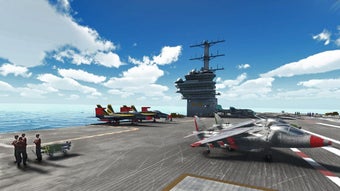
Carrier Deck from Every Single Soldier places you in the Air Boss seat of a Nimitz-class carrier, directing combat flight operations in real time. You coordinate launches and recoveries while overseeing fueling, arming and hangar logistics, all under constant time pressure. The title blends campaign progression with challenge scenarios and focused deck management systems. It targets military-simulation fans and players who enjoy high-stakes multitasking and rapid tactical decision-making.
What kind of game is Carrier Deck?
This is a high-intensity time-management simulation that casts the player as the Air Boss aboard the USS Ronald Reagan. You move, fuel, arm, and position aircraft for split-second launches and landings while juggling hangar traffic and maintenance. The game introduces a high-stakes consequence structure, where a single deck collision can terminate a mission, so prioritization and quick sequencing are essential to survival.
How do missions and modes shape play?
The structure mixes long-form and bite-sized challenges across distinct modes and theaters. A global campaign sends you to the North Atlantic, South China Sea, and the Mediterranean, while Survival tests endurance and Quick Play randomizes objectives. Mission types include search, reconnaissance, intercept, and ground strikes, and the fleet roster covers fixed-wing fighters and rotary aircraft, each demanding different handling and turnaround times.
What does the interface feel like on console?
The Switch release is one of several console ports noted as faithful to the original, but the control method matters. The game uses cursor-based interactions that players report are easier with a mouse; controller users on Switch must adapt to slower cursor movement. The UI groups tasks by deck area and uses visual coding to reduce cognitive load, yet many operations still require precise input and timing.
How steep is the learning curve and who is it for?
Success depends on rapid decision-making and tight resource management in real time, so the learning curve is purposeful rather than accidental. Players who enjoy methodical, pressure-driven routines gain the most, while casual players may find the tempo demanding. The game rewards repeated play through improved handling of launch cycles, deck flow and maintenance sequencing as players refine their operational priorities.
A focused choice for players who like procedural challenge
The developer’s background, led by founder Johan Nagel who served as a military officer, gives the design a disciplined, operational feel that rewards repetition and tactical refinement. Expect concentrated sessions that train prioritization and pacing rather than relaxed exploration. For readers seeking a pressure-filled scheduling challenge that trains procedural thinking, the game is a clear fit; patience and practice improve outcomes decisively.